AI has changed the creative writing process. Writers can now use generative tools to brainstorm characters, explore story ideas, build fictional worlds, and work through difficult sections without starting every draft from scratch. One increasingly specialized application is the AI smut writer, a tool designed around mature and adult-oriented fiction. Rather than replacing the person behind the story, these platforms can act as creative assistants for developing ideas, shaping characters, experimenting with narrative styles, and getting past writer’s block.
But choosing an AI smut writer is about more than asking whether it can generate text. Writing quality, character consistency, memory, customization, privacy, editing tools, and platform policies can all affect the experience. Some services concentrate on structured storytelling, while others are built around interactive roleplay or broader creative writing. Understanding how these tools work and what separates a useful platform from a frustrating one is the best place to start. So, what exactly is an AI smut writer, and how does the technology behind it work?
What Is an AI Smut Writer?
An AI smut writer is an artificial intelligence-powered writing tool intended to assist with adult-oriented fiction and mature fictional storytelling. Like other generative writing systems, it interprets instructions provided through prompts and produces text based on details such as characters, settings, relationships, tone, themes, and plot direction.
For a writer, the appeal is often the ability to move quickly from an idea to a workable draft. A user might provide a character concept or basic story premise and use the tool to explore possible scenes, dialogue, descriptions, or plot developments. The writer can then revise, reject, or expand the generated material.
What separates specialized platforms from general AI assistants is often their focus. Some provide character profiles, persistent story information, writing-style controls, or workflows designed for longer fictional projects. Features and content policies vary between services, however, so users should evaluate each platform individually rather than assuming every tool works the same way.
How Does an AI Smut Writer Work?
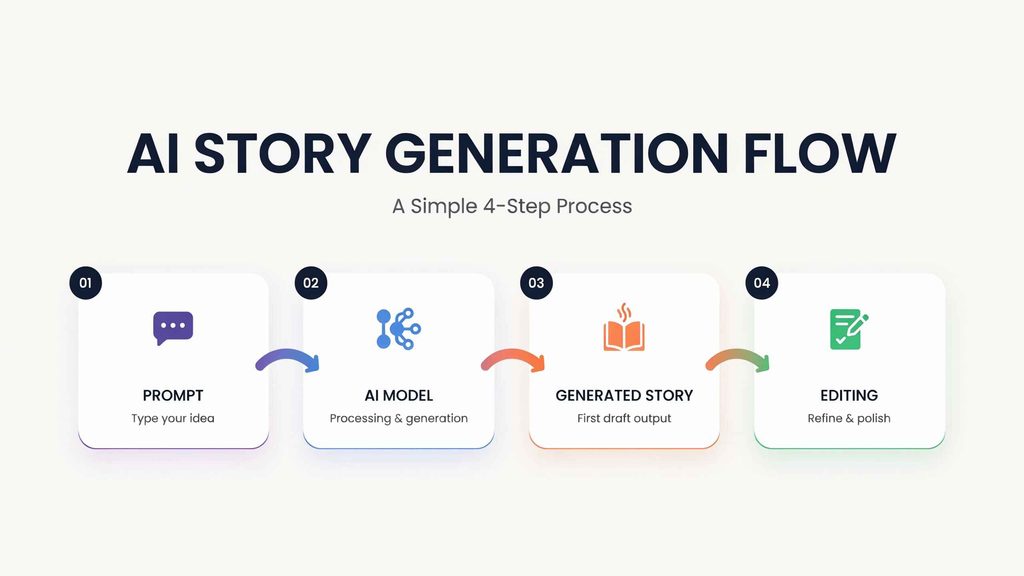
An AI smut writer uses a generative language model to interpret a prompt and predict a relevant sequence of words based on patterns learned during training. The process begins with the information a user provides, which can include character descriptions, setting details, narrative direction, tone, or other creative instructions.
The quality of the result depends heavily on both the underlying model and the instructions it receives. A vague prompt may produce generic writing, while a well-structured prompt can give the system clearer guidance about the characters and direction of the story.
Some platforms also maintain conversation history or use saved character information to preserve context. This can be particularly useful when developing longer narratives because characters and events need to remain consistent. Users can usually refine an output by changing their instructions, requesting a rewrite, adjusting the style, or taking the story in a different direction.
In practice, the technology works best as an iterative writing process: prompt, review, revise, and repeat.
Why Are People Using AI for Adult Fiction?
The growing interest in AI-assisted adult fiction is connected to several familiar challenges faced by writers. Developing characters, planning a plot, maintaining continuity, and finding the right words can take considerable time. An AI tool can provide a starting point when a writer has an idea but is unsure how to develop it.
Speed is another factor. Instead of spending a long time brainstorming several possible directions, writers can ask for alternatives and decide which ideas are worth developing. This does not mean the generated material is automatically ready to publish; human editing remains important.
Personalization is also attractive. Writers can provide information about characters, narrative perspective, tone, pacing, and story structure, then refine the output through additional instructions.
For some users, privacy is an important consideration as well. However, privacy should never be assumed simply because a service is AI-based. Each platform has its own data practices and policies, so users should understand how their prompts and account information are handled before sharing sensitive or unpublished material.
Key Features to Look for in an AI Smut Writer
A useful AI smut writer should offer more than fast text generation. The most important features depend on how you plan to use the platform, particularly if you are working on a story that extends beyond a single session.
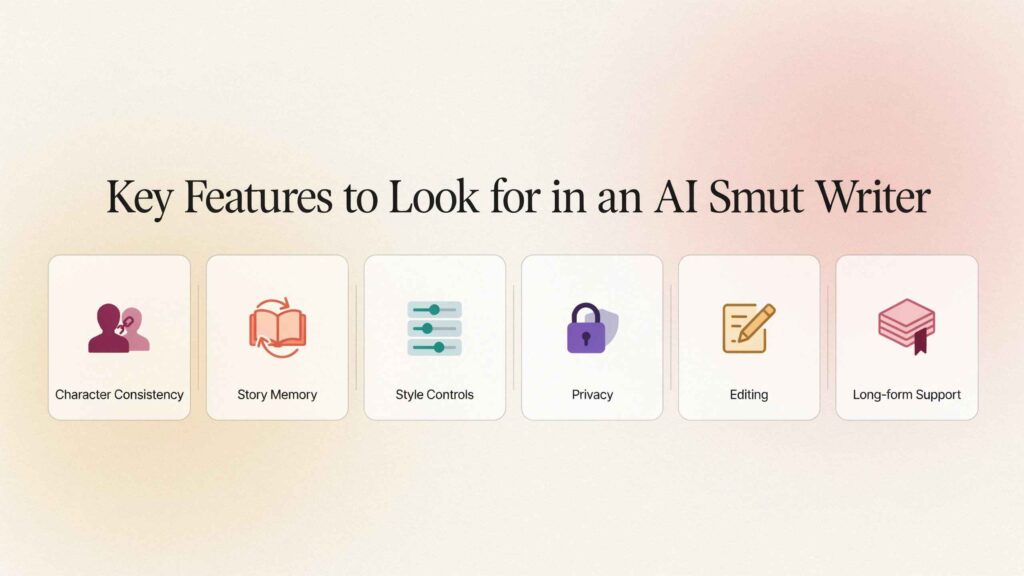
Character consistency: Recurring characters should retain their personalities, backgrounds, motivations, and relationships. Poor consistency can quickly make a long story feel disconnected.
Story memory: Memory or context features can help a platform keep track of previous events. This becomes increasingly valuable as a narrative grows.
Writing style controls: Look for options that let you influence tone, pacing, narrative perspective, and overall voice. Greater control can make generated material easier to shape into your preferred style.
Privacy: Review the platform’s privacy policy before entering personal information, confidential material, or unpublished work. Pay attention to how prompts and generated content are stored and processed.
Editing and regeneration: Good editing controls make experimentation easier. Being able to rewrite a section or generate an alternative can save time compared with restarting the entire story.
Long-form support: If you intend to write chapters or extended fiction, check how well the platform handles context over longer sessions.
The strongest tools are not necessarily those with the longest feature lists. They are the ones whose features actually fit your writing workflow.
AI Smut Writer vs. General AI Writing Tools
The biggest difference between a specialized AI smut writer and a general AI writing assistant is purpose. General-purpose AI platforms are designed to handle many tasks, including research, business writing, summaries, brainstorming, editing, and creative work. Their broader functionality can be useful when a project involves several different types of writing.
Specialized platforms may instead focus more heavily on character-driven fiction, narrative continuity, mature themes, and customization. Some may provide dedicated character profiles or story-memory features that are particularly useful for fiction writers.
That does not automatically make one option better than the other. A general AI assistant may be more useful for editing, research, outlining, or preparing supporting content, while a specialized service may provide a more focused storytelling environment.
Content policies are another important difference. AI services can have different rules regarding mature material, so users should always check the current policies of a platform before relying on a particular feature.
Ultimately, the better choice depends on the writer’s goals, preferred workflow, privacy expectations, and desired level of creative control.
AI Smut Writer vs. AI Roleplay Chatbots
An AI smut writer and an AI roleplay chatbot can appear similar because both may involve fictional characters and interactive text. Their underlying purpose, however, is usually different.
A writing-focused platform is generally intended to help create structured fiction. It may support character development, story planning, longer narratives, revisions, and continuity between sections. This makes it more suitable for someone who wants to build a complete fictional story.
Roleplay chatbots are usually centered on real-time interaction. The user communicates with an AI character, and the system responds to each message. The experience is therefore more conversational and spontaneous than traditional story drafting.
Neither approach is inherently better. Someone developing a planned narrative may value outlining and editing tools, while someone interested in interactive character experiences may prefer a chatbot format.
The distinction matters because choosing a platform based only on its ability to generate mature content can overlook the features that actually determine whether it fits a particular creative workflow.
Benefits and Limitations
An AI smut writer can make several parts of the creative process faster. Brainstorming is one of the most obvious uses. Writers can explore character concepts, settings, relationship dynamics, plot possibilities, and alternative story directions without having to develop every idea manually.
These tools can also help with writer’s block. A rough premise can be turned into several possible approaches, giving the writer something concrete to evaluate and develop. Editing and rewriting features can further reduce repetitive work.
There are limitations, however. Generated writing can sound repetitive, lose character details, introduce contradictions, or simply miss the intended tone. Longer stories can become especially challenging when a platform has limited context or memory.
There is also the question of originality and editorial judgment. AI-generated text should not automatically be treated as finished work. Writers should review the output carefully, make meaningful creative decisions, and edit the final result.
The most productive approach is to view AI as an assistant. It can accelerate parts of the process, but the writer remains responsible for direction, quality, and the final story.
How to Choose an AI Smut Writer
Choosing an AI smut writer starts with identifying what you actually need. If your priority is long-form storytelling, look for reliable memory and context handling. If character development matters most, examine whether the platform supports detailed character profiles and consistent traits.
Writing controls are worth testing as well. A platform may generate technically fluent text but still be frustrating if you cannot easily control tone, perspective, pacing, or narrative style.
Privacy should be evaluated before creating an account or uploading unpublished material. Read the platform’s privacy policy and terms rather than relying on assumptions about how your information is treated.
Usability also matters. A clean interface, straightforward prompting system, editing options, and reliable regeneration can make a bigger difference than an impressive feature list.
Finally, compare pricing and content policies. If a free plan or trial is available, use it to evaluate the actual writing quality before paying. The right platform is ultimately the one that matches your creative goals, budget, workflow, and expectations.
Privacy and Responsible Use
Privacy deserves particular attention when using an AI smut writer because prompts may contain original story ideas, unpublished writing, or detailed fictional character information. Before using a service, review its privacy policy to understand what information it collects, how it is stored, and how submitted content may be processed.
Avoid entering unnecessary personal or confidential information into unfamiliar platforms. If you are working on unpublished material, it is sensible to understand the provider’s data practices before sharing substantial portions of your work.
Responsible use matters too. Users should follow the platform’s terms and applicable laws and ensure that fictional adult content does not involve minors. Content depicting real people also raises separate privacy and consent concerns.
AI-generated writing should be reviewed before it is published or shared. A model can misunderstand instructions or produce material that does not reflect the writer’s intention.
The safest workflow is straightforward: understand the platform’s policies, protect sensitive information, review generated material, and keep meaningful human control over the final creative work.
Best Use Cases for Adult Fiction Writers
Adult fiction writers can use AI tools at several stages of the writing process without handing over complete creative control.
Brainstorming: Generate possible characters, settings, conflicts, themes, and plot directions when you need fresh ideas.
Character development: Organize personality traits, motivations, backgrounds, relationships, and recurring details before beginning a longer story.
Writer’s block: Give the system a basic premise and ask for several possible directions. Even an imperfect suggestion can help restart the creative process.
Outlining: AI can help turn a broad concept into a sequence of chapters, scenes, or story beats that the writer can then revise.
Editing: Generated text can be used as a starting point for improving clarity, pacing, dialogue, or consistency.
Experimenting with style: Writers can compare different narrative perspectives or approaches before settling on a voice that suits the project.
These applications are most useful when the writer remains actively involved. AI can generate possibilities, but deciding which ideas belong in the final story still requires human judgment.
Frequently Asked Questions
1. What is an AI Smut Writer used for?
An AI smut writer can assist with adult fiction by helping writers brainstorm ideas, develop characters, explore plots, and draft or revise fictional material.
2. How does an AI Smut Writer create stories?
It processes user prompts through a generative language model and produces text based on the characters, setting, instructions, and context provided.
3. Is an AI Smut Writer useful for long stories?
It can be, particularly when the platform provides reliable memory or context features. Performance varies, so test continuity before starting a large project.
4. How do I choose an AI Smut Writer?
Compare writing quality, character consistency, memory, customization, privacy, editing tools, pricing, usability, and the platform’s current content policies.
5. Is using an AI Smut Writer private and safe?
Privacy depends on the individual service. Read its privacy policy, understand its data practices, and avoid sharing unnecessary personal or confidential information.
Final Verdict
An AI smut writer can be a practical creative tool for writers who want help turning rough ideas into more developed fictional narratives. Its biggest strengths are speed, brainstorming support, character development, customization, and assistance with repetitive parts of the writing process.
But technology is not a substitute for a writer’s judgment. Inconsistent characters, repetitive language, limited context, changing platform policies, and privacy concerns can all affect the final experience. That is why the best tool is not necessarily the one promising the most features; it is the one that fits the writer’s actual workflow.
Used thoughtfully, AI can shorten the distance between an idea and a finished draft. The human writer still provides the direction, personality, editorial judgment, and creative decisions that give a story its identity.