
Other sites like Tomoson, for brands and for creators
The most useful sites like Tomoson depend on what you want from a collaboration. Afluencer and Intellifluence suit brands seeking applicants for campaigns, Collabstr helps with buying creator packages, and Influenster focuses on product discovery and honest reviews. For video production, JoinBrands, Billo, and Insense offer different routes to working with creators.
That distinction matters. A free product, a sponsored Instagram post, and a video licensed for advertising are different deliverables. Choosing an influencer marketplace because it promises thousands of profiles tells you little about whether it can supply the work you need.
This guide compares seven alternatives for small businesses, bloggers, micro-influencers, and UGC creators. It explains where each fits, what costs to check, and how to agree on a collaboration before shipping a product or recording a video. Platform details were reviewed in November 2026; availability and prices can change.
What to know before choosing sites like Tomoson
Tomoson became known for connecting brands with people who created content around products. However, its current public homepage does not present a clear, usable version of that original marketplace. Avoid treating an old pricing page or third-party tutorial as evidence that you can still launch campaigns there.
When comparing replacements, separate three models:
- Product gifting or sampling: a creator receives an item; posting obligations depend on the agreement.
- Sponsored content: a brand pays for publication to the creator’s audience.
- UGC production: a creator makes assets for the brand to publish or advertise, with agreed usage rights.
UGC means user-generated content, although commissioned UGC is paid creative work. A strong video portfolio can matter more than follower count when the brand is buying production rather than audience reach.
Sites like Tomoson compared at a glance
| Platform | Useful for | Brand cost to check | Creator consideration |
| Afluencer | Applications to brand collaborations | Free entry advertised; $49/month Marketplace tier | Free entry; optional paid tiers |
| Intellifluence | Campaigns and direct pitches | Limited free plan; Starter $99/month | Free to join |
| Collabstr | Purchasing creator packages | Free account plus 10% hiring fee | 15% transaction fee |
| JoinBrands | UGC images and videos | Free plan plus 15% platform fee | Standard creator fee is 20% |
| Billo | Commissioned creator videos | Check current order and service quote | Location and onboarding eligibility |
| Insense | UGC and creator advertising | Subscription, creator costs, transaction fees | Campaign fit and licensing terms |
| Influenster | Product sampling and reviews | Brand sampling program terms | Selection and task requirements |
Free access does not mean free production. Budget separately for products, shipping, creator compensation, taxes, and additional licensing. Check the final checkout or agreement before committing.
Seven sites like Tomoson for different collaboration goals
Afluencer for finding interested brand partners
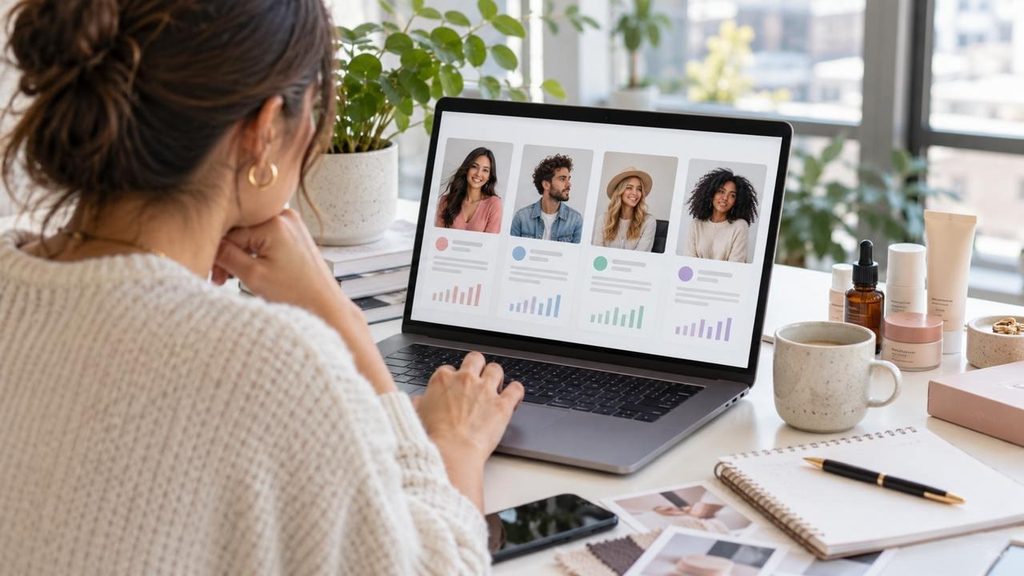
Marketer comparing creator profiles on a laptop
Afluencer lets brands publish collaborations and receive applications from creators. This makes it useful when you prefer reviewing interested applicants to sending dozens of cold messages. Creators can build profiles, find relevant opportunities, and discuss deliverables directly with brands.
Its public pages advertise free entry, while its pricing page also lists a $49 monthly Marketplace tier and optional creator upgrades. Some descriptions of free allowances differ, so confirm the limits inside your account. Agree on payment, shipping, and posting expectations before accepting a collaboration.
Intellifluence for small campaign tests
Intellifluence combines campaign applications with direct pitches and creator offers. Brands can test its limited free plan before buying a subscription. The published Starter plan costs $99 monthly, with larger plans offering higher campaign and application allowances.
Influencers join free and can browse opportunities or receive brand pitches. This is a practical option for bloggers and social creators who want product collaborations alongside paid assignments. For brands, the main limitation is capacity: the free tier permits only one active campaign and five marketplace applicants. Choose a paid tier when those limits constrain a useful test.
Collabstr for clearly priced creator packages
Collabstr helps brands find creators and purchase listed services. It suits a business that knows it needs a particular deliverable and wants to compare packages before negotiating. Creators can present services and rates rather than relying entirely on applications.
On the free brand plan, a 10% hiring fee applies to orders; creators face a separate 15% transaction fee. Payment is held until order completion under the platform’s process. Check what the package includes, especially posting, revisions, raw footage, and advertising permission. An account that is free to open still produces transaction costs.
JoinBrands for product-focused UGC
JoinBrands supports commissioned images and videos, with separate content-only and content-plus-posting options. That distinction helps brands avoid assuming that buying a video also buys distribution to a creator’s followers.
Its free brand plan lists a 15% platform fee. Creator help documentation lists a 20% earnings fee for standard free accounts, reduced for Creator Pro. Public starting prices and newer help-center job minimums differ, so use the live campaign quote. Creators should check country eligibility, reimbursement rules, and their net payout before accepting an assignment. Brands should match the job type to the asset they actually need.
Billo for commissioned video production
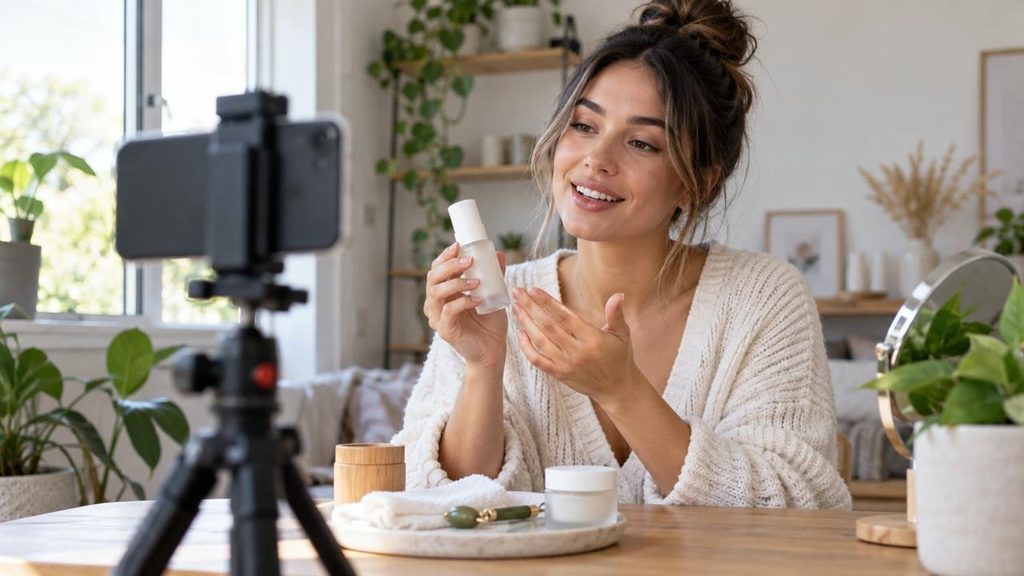
UGC creator filming a skincare product demonstration
Billo focuses on creator marketing, including UGC ads, organic posting, and partnership advertising. It is worth considering when the main requirement is video production rather than a traditional blogger product review.
Brands should specify the opening hook, product demonstration, aspect ratio, and intended placement. Creators should prepare a portfolio showing clear audio and convincing demonstrations. Billo’s public creator page lists the United States, Canada, and United Kingdom and a minimum age of 18; confirm current onboarding availability. Check the order’s payment and licensing terms instead of assuming every service includes the same rights.
Insense for UGC and creator advertising
Insense brings together UGC production, influencer partnerships, and creator advertising workflows. It fits teams that want to commission content and potentially distribute it through arrangements such as Meta Partnership Ads or TikTok Spark Ads.
The budgeting question is broader than a subscription: platform access, creator compensation, and transaction fees can all contribute. Confirm whether an offer is self-service or managed, because inclusions differ. Creators should clarify whether the request covers filming only, public posting, or advertising through their account. These tasks require different permissions and should be priced accordingly.
Influenster for product sampling
Influenster is oriented toward discovering products and sharing honest experiences. It is a closer fit for someone interested in trying products than for a freelancer seeking predictable video-production income.
Complete your profile accurately, follow the app’s instructions, and review the requirements attached to individual offers. Registration should not be treated as a guarantee of selection or regular deliveries. Brands considering sampling should investigate the relevant business program rather than assuming a consumer account provides campaign management. Product access and a paid brand contract are different opportunities.
How brands should shortlist sites like Tomoson
Start with one measurable goal. For creator content, measure cost per usable asset. For sponsored distribution, examine audience location, relevant engagement, and attributable visits or sales. Follower totals alone cannot answer those questions.
Use a small pilot before arranging a large shipment. Give each creator a written brief covering:
- Deliverables, video length, format, and deadline.
- Product delivery and any reimbursement process.
- Included revisions and approval criteria.
- Organic use, paid advertising, duration, and exclusivity.
- Payment amount, fees, and release conditions.
For example, a skincare brand might commission three demonstrations before requesting sponsored posts. Testing the content first can reveal whether the product is easy to explain and which creative approach deserves further spending.
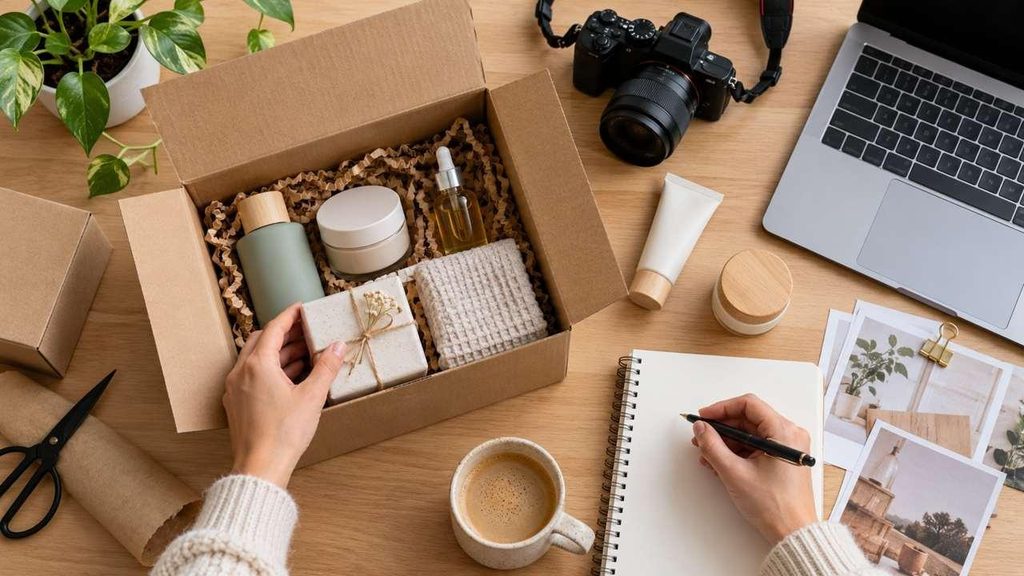
Product samples being prepared for a creator shipment
How creators can evaluate sites like Tomoson
Choose opportunities that fit your skills and location. A blogger should check whether written coverage is accepted; a video creator should compare filming requirements and licensing. Calculate earnings after fees, supplies, travel, and editing time.
Keep a short portfolio with relevant examples. Ask for clarification before accepting vague requests such as “unlimited revisions” or unspecified advertising rights. Save the brief and payment agreement, and use the platform’s dispute process when needed.
Honest reviews and clear disclosures
Free products and payments can create a material connection between a creator and a brand. The FTC’s Disclosures 101 for Social Media Influencers explains when and how that connection should be disclosed. Make the relationship easy to notice alongside the endorsement, and describe actual experience honestly.
A brand should never require praise as the price of receiving a product. Retail review sites also have their own rules; permission to publish sponsored social content does not automatically permit an incentivized store review. Check the destination’s policy before including reviews in a campaign brief.
Frequently asked questions
Which sites like Tomoson suit beginners?
Afluencer and Intellifluence offer free entry options. Start by checking campaign availability, account limits, and whether your country is supported.
Can creators use sites like Tomoson without a large following?
Some UGC assignments prioritize production quality. Sponsored audience campaigns may have follower or engagement requirements, so read each brief.
Are free products a substitute for payment?
Only if you willingly accept that arrangement. Assess the product’s value against the work requested and any rights you grant.
Do brands own every commissioned video?
Ownership and permission to use content depend on the agreement. Confirm advertising, editing, duration, and raw-footage rights explicitly.
Can these platforms guarantee sales or creator income?
No. Results depend on campaign quality, product fit, demand, selection, and execution. Treat published success stories as examples, not promised outcomes.
Choosing your next platform
The right sites like Tomoson match a specific job: sourcing collaborators, purchasing content, reaching an audience, or trying products. Compare the full cost and written terms, run a manageable test, and expand when the results justify it. That approach gives brands a clearer buying decision and helps creators protect their time.





One Comment